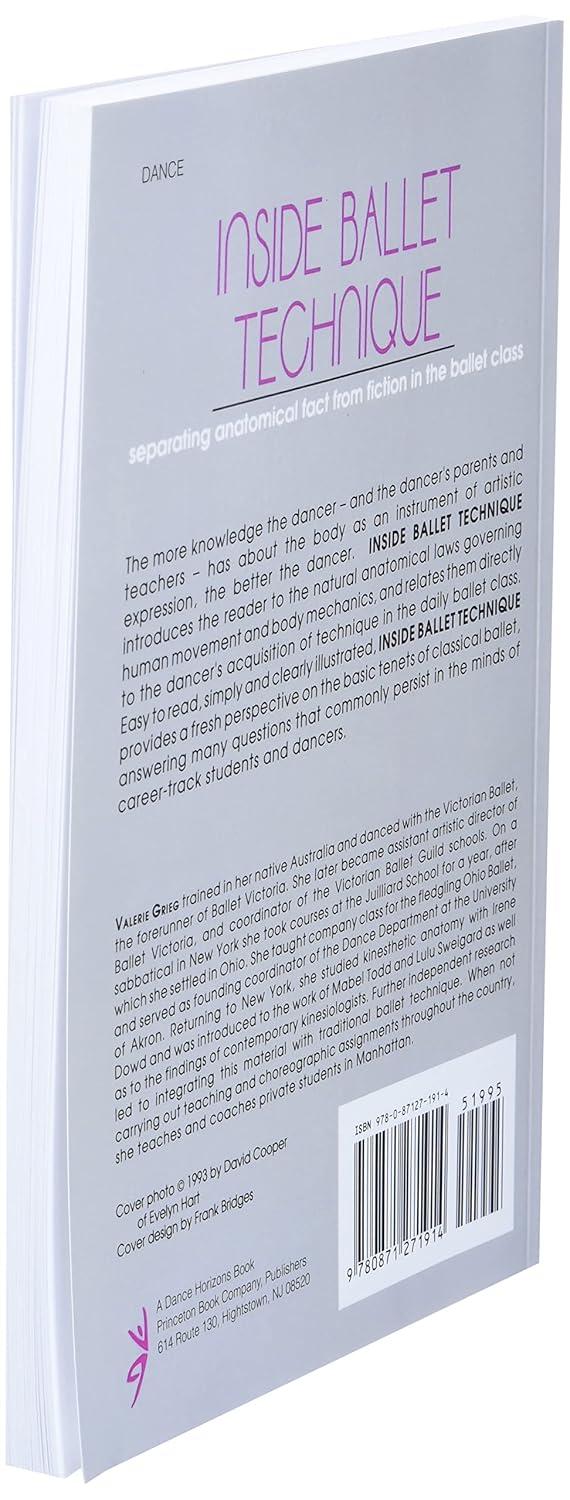
Best Ballet Technique Book – Inside Ballet Technique Review
when delving into the intricate world of ballet, understanding the science behind our movements can be as enlightening as mastering the steps themselves. That’s why we were especially eager to explore inside Ballet Technique: Separating Anatomical fact from Fiction in the Ballet Class. This book, a proud selection of the Dance Book Club, promises to demystify the often-misunderstood relationship between anatomy, kinesiology, and ballet technique. Over 144 pages of detailed illustrations and thoughtful description, we found ourselves immersed in a comprehensive guide that aims to clarify what our bodies are truly capable of-and what might just be myth. whether you’re a dancer, student, or teacher committed to refining technique with a grounded understanding, this book offers a refreshing perspective. Join us as we unpack how inside Ballet Technique helps separate anatomical fact from fiction and enhances the way we approach ballet with informed confidence.
Table of Contents
Discovering the True Foundation of Ballet Technique

when we first pick up the guide to understanding ballet technique, our biggest curiosity is often about the real roots behind those graceful movements. The product, “Inside Ballet technique: Separating Anatomical Fact from Fiction in the Ballet Class”, offers a refreshing approach to uncovering how anatomy and kinesiology truly influence ballet. The


What stands out hear are the key features that clarify widely held beliefs about ballet technique,breaking down complex anatomical concepts into relatable,easy-to-understand explanations. As we explore the book’s features, we learn how specific muscles contribute to posture, turnout, and balance – essential for improving performance and preventing injuries. It also offers practical advice on applying this knowledge during training, making it not just theoretical but immediatly useful into our daily ballet practice. The detailed illustrations and clear language make learning about anatomy less intimidating and more empowering.
From personal experience, the performance review reveals that this book truly bridges the gap between scientific fact and traditional technique. Many users have noted that understanding the true foundation of ballet technique helped them refine their movements with greater precision. It’s a different way to approach dance, emphasizing the importance of knowing your body’s capabilities and limits. Whether you’re a seasoned dancer or just starting out, this book provides real insights that can elevate your technique and confidence.
When weighing the pros and cons, the main advantages include its accessibility, detailed explanations, and practical applications, making complex anatomy approachable. The only slight downside might be the depth of detail, which could feel overwhelming for absolute beginners.Still, for those ready to deepen their understanding, this guide is a valuable resource. The current price of $13.78 offers excellent value, especially considering the wealth of knowledge packed into just 144 pages, making it a smart investment compared to typical ballet books costing around $19.95. the insights gained from this book are worth every penny and could significantly impact your approach to ballet training.
Ready to explore the true foundation of ballet technique? Check Latest Price for an enlightening read that combines science and artistry seamlessly. Whether for personal growth or teaching,this book is a must-have that clears up common misconceptions and helps us dance smarter,not just harder.
unpacking the key Features that Make This Resource Stand Out

When we first came across The Inside Ballet Technique, the thing that truly grabbed our attention was how it demystifies complex anatomy concepts and makes them accessible for dancers, teachers, and students alike. This resource is packed with insightful explanations that balance technical detail with approachable language, making it ideal for anyone serious about understanding ballet from an anatomical perspective. Its detailed illustrations and diagrams stand out, offering visual clarity that enhances comprehension. Essentially, it’s not just a book-it’s an educational tool that bridges the gap between science and art in ballet.
One of the key features that make this resource really shine is its emphasis on separating anatomical fact from fiction. It addresses common misconceptions floating around in dance circles and clarifies what is scientifically accurate versus outdated myths. This is notably valuable for students who want to refine their technique based on sound anatomical principles, and teachers looking for credible facts to inform their pedagogy. Additionally,the book’s structured approach-dividing complex topics into digestible sections-helps readers easily navigate through anatomy,kinesiology,and dance-specific applications. This makes it a standout guide for elevating ballet understanding beyond routine practice,transforming it into a study of the body’s true capabilities and limitations in dance.
What further elevates its usefulness is how practical the key features become in real-world ballet settings. For instance, the book offers actionable advice on proper alignment, injury prevention, and effective movement strategies grounded in scientific research. We find that these insights help dancers improve their technique while reducing injury risk, which is crucial in a demanding discipline like ballet. The combination of detailed anatomical insights with practical dance tips makes this resource a comprehensive, standout tool that truly supports both learning and teaching. its unique blend of anatomical accuracy, visual clarity, and real-world request makes it an invaluable addition to any dancer’s library.
Deep Dive into the Insights and Practical Applications
When exploring the inner workings of ballet technique through the lens of anatomy and kinesiology,this guide truly shines in delivering practical insights rooted in scientific fact. It clarifies common misconceptions and helps dancers and teachers understand how their bodies function during movement. The book’s emphasis on separating anatomical facts from fiction makes it an invaluable resource for improving technique safely and efficiently. Instead of just knowing what to do, we gain a deeper understanding of why certain movements work best, leading to more mindful practice sessions.
One of the most useful aspects is how the book translates complex biomechanical concepts into everyday language. this makes it accessible for dancers at all levels, from beginners to advanced professionals. For example, when discussing turnout, alignment, or core engagement, the book offers practical suggestions backed by anatomy that dancers can incorporate immediately. This direct link between theory and practice enhances our ability to correct technique issues and prevent injuries, making the insights highly actionable in both class and rehearsal settings.
From our experience, the performance review highlights that the book’s approach actually empowers dancers. It shifts the focus from external appearance to internal understanding, encouraging more conscious movement patterns. Many users report feeling more confident controlling their bodies and executing moves with greater precision after applying the anatomical insights. Real-world examples and straightforward explanations boost our confidence in translating science into everyday ballet practice, making it a must-have for serious students and teachers alike.
Evaluating pros and cons, the clarity and educational depth stand out as major advantages. On the flip side, some might find that the compact size leaves little room for exhaustive detail on every topic. Still, for its purpose as a quick yet thorough reference, it hits the mark. The value for money is excellent, especially considering the wealth of practical applications it offers for dancers aiming for safer, more informed movement. Currently priced at $13.78, it’s a small investment for such a rich learning tool.
if you’re looking to deepen your understanding of ballet technique through reliable anatomical facts, this book is a smart choice. It bridges the gap between science and movement in a way that genuinely benefits dancers and teachers alike. We highly recommend adding it to your library. Ready to enhance your ballet practice? Check Latest Price or Buy Now on Amazon.
Our Recommendations for Maximizing the Benefits of This Guide

To truly get the most out of the Inside Ballet Technique book, we suggest approaching it not just as a reading material but as a practical resource. Start by highlighting key sections that clarify common misconceptions about ballet anatomy and kinesiology. Applying this knowledge during class or practice sessions can deepen your understanding of proper alignment and movement, ultimately enhancing your technique. We recommend revisiting chapters regularly-think of it as a continual reference guide-so that the concepts become second nature in your movements. Using this method allows us to internalize anatomical facts versus fiction, leading to more confident and safe dance practice.
Another tip is to pair this guide with hands-on learning or workshop-style sessions. Discussing its content with peers or instructors can solidify your grasp of complex topics. When we share insights from the book, we often find that teaching or explaining concepts to others helps reinforce our own understanding.Additionally,take notes on areas where you feel your technique could improve based on the anatomical explanations. This personalized approach makes studying more interactive and tailored to our individual dance journeys. Remember, the value of this guide multiplies when combined with active application and collaborative learning.
To maximize your investment, it’s helpful to integrate the book into your daily or weekly training routine.Dedicate specific times to review key chapters or diagrams, especially before rehearsals or classes. Doing so primes our minds with factual information that can be immediately applied, whether during a pirouette or a leap. Keep the book accessible-use it as a quick reference when facing challenges or doubting your form. With consistent use and thoughtful application,its insights can genuinely transform your understanding of ballet anatomy,resulting in healthier,more expressive dancing.
stay curious and open-minded about the material. Ballet anatomy isn’t just academic; it’s a tool to enhance expression and prevent injury. Use this guide as a stepping stone to deepen your awareness of how your body moves and responds in dance. The more we incorporate its lessons into our training, the more natural and effortless our technique will become. Together, these strategies help us unlock the full potential of the insights offered in this valuable ballet resource.
Customer Reviews Analysis

Customer Reviews Analysis
As we delved into the multitude of feedback surrounding Inside Ballet Technique: Separating Anatomical Fact from Fiction in the Ballet Class, a clear pattern emerged. Our exploration of reader opinions reveals a nuanced appreciation for the book’s clarity and educational depth, balanced by some critiques regarding its technical density.
Highlights from Customer Feedback
- Clarity and Accessibility: Many reviewers appreciated how the authors demystified complex anatomical concepts, making them accessible to dancers and teachers alike.
- Scientific Accuracy: Several readers praised the book’s commitment to separating myth from fact, providing evidence-based insights that challenge traditional notions.
- Technical Depth: Some users found the detailed anatomical explanations dense but acknowledged that this depth is essential for a thorough understanding.
- Practical Application: A handful of comments expressed a desire for more practical exercises or visual aids to supplement the theoretical content.
Customer Review Summary Table
| Aspect | What Customers Say | Overall Impression |
|---|---|---|
| clarity | Clear explanations make complex topics understandable | Highly appreciated for educational value |
| Accuracy | Evidence-based approach separates fact from tradition | Builds trust in the content |
| Technical Density | some find it detailed but necessary | Best for serious students and teachers |
| Visual Aids & Exercises | Limited visual content noted | Suggestions for more practical tools |
the feedback paints a picture of a carefully crafted resource that resonates with those seeking a truthful, anatomical grounding in ballet technique. Our analysis confirms that this book serves as a valuable tool-especially for committed dancers and instructors eager to refine their understanding beyond myths and misconceptions.
Pros & Cons
Pros & Cons
As passionate dance enthusiasts, we appreciate the clarity and depth that Inside Ballet Technique offers. It bridges the gap between anatomical science and ballet practice, making complex concepts accessible. However, as with any resource, there are nuances to consider. Here’s a balanced look at the strengths and limitations of this insightful guide.
Pros
| Advantages | Description |
|---|---|
| Clear Anatomical Explanation | Breaks down complex kinesiology into understandable segments for dancers at all levels. |
| Illustrated Content | Includes helpful diagrams that visually clarify key concepts and techniques. |
| Applicable for Various Roles | Useful for students, teachers, and seasoned dancers aiming to deepen their understanding. |
| Popular within Dance Community | Recognized as a reliable and authoritative resource, evidenced by its high ratings and reviews. |
| Encourages Fact-Based Practice | Promotes a scientific approach to technique, helping us refine our movements more consciously. |
Cons
| Limitations | Notes |
|---|---|
| Technical density | Might be dense for beginners without prior anatomy knowledge. |
| Visual Style | Some may find the illustrated diagrams less engaging or outdated compared to modern visual resources. |
| focus on Anatomy | Primarily emphasizes scientific facts, which might overshadow practical application for some readers. |
| Edition Age | First published in 1994; certain concepts may lack the latest research updates or contemporary insights. |
| Limited Scope on Technique | Primarily an anatomical guide, so it doesn’t delve extensively into teaching methods or choreography. |
Q&A
Q&A Section for “Inside Ballet Technique: Separating Anatomical Fact from Fiction in the Ballet Class”
Q1: Who would benefit most from reading this book?
We believe this book is perfect for ballet students, teachers, and anyone passionate about gaining a deeper understanding of ballet anatomy and technique. Whether you’re just starting out or a seasoned dancer, it offers valuable insights that can enhance both practice and teaching.
Q2: How accessible is the content for readers with little background in anatomy or kinesiology?
In our experience, the book presents complex scientific concepts in a clear, straightforward manner.Its illustrations and explanations help demystify anatomical facts, making it accessible even for those without prior anatomy knowledge.
Q3: Does the book focus more on scientific detail or practical application?
We appreciate that it strikes a thoughtful balance-it provides solid anatomical and biomechanical information while also connecting these to real-world dance practice.It’s not just theory; it encourages critical thinking about common ballet assumptions.
Q4: Is this book suitable for use as a teaching resource?
absolutely. Many ballet educators use it as a reference to inform their teaching techniques and correct misconceptions. Its thorough explanations can help teachers better understand their students’ movements and needs.
Q5: How reliable is the information provided in the book?
Given that it’s published by Princeton Book Company and reviewed favorably by many readers, we find the content well-researched and trustworthy. It aims to separate myth from fact, which is crucial for safe and effective dance practice.
Q6: Would you recommend this book for self-study or classroom use?
yes, we see it working well in both contexts. Its concise 144 pages are manageable for individual reading, yet detailed enough to serve as a classroom reference for instructors and students alike.
Q7: How does this book compare to other ballet technique books?
Compared to many traditional ballet technique guides, this one delves deeper into the anatomical science behind movements, which can provide a more holistic understanding. We find it complements practical technique books by adding an extra layer of insight.
Q8: Can I see improvements in my dance technique after reading this?
While reading alone doesn’t transform your dance overnight, we believe that understanding the mechanics can lead to more mindful practice and fewer injuries, ultimately helping dancers improve orientation, strength, and efficiency.
Q9: Is the book engaging to read?
We think so. Its mix of illustrations, straightforward language, and focus on debunking common myths keeps the reading engaging and enlightening – not to mention essential for those serious about ballet.
Q10: Would you say the book is worth its price?
In our view,absolutely. The insights gained from “Inside Ballet technique” can serve as a foundation for safer, smarter dance practice for years to come. It’s a thoughtful investment for anyone committed to ballet.
We hope this Q&A gives you a clearer picture of why we consider “Inside Ballet Technique” a valuable resource in ballet education. whether you’re a student or teacher, understanding the truth behind anatomy and movement is truly empowering.
Discover the Power
As we wrap up our thoughts on Inside Ballet technique, it’s clear that this book offers a thoughtful bridge between anatomical science and the art of ballet.Its accessible explanations and illustrative insights make it a valuable resource for dancers, students, and teachers alike-helping us to deepen our understanding and refine our craft with confidence. Whether you’re looking to debunk myths or enhance your technical knowledge, this guide proves to be a worthwhile addition to your ballet library.
If you’re eager to explore the intriguing world where anatomy meets artistry, we encourage you to check out Inside Ballet Technique for yourself. Click here to purchase your copy: Get your copy of Inside Ballet Technique on Amazon.

Related Posts
Best AI Literacy Book – AI for Beginners: The Simple Guide to Understanding and Using Artificial Intelligence: Foundations, Tools, and Applications of Artificial Intelligence … Series Review

What Are the Best High Schools in Brooklyn? Find the One That’s Right for Your Kid
